
Spello
Pink stone, flower-filled lanes and two thousand years of history, a short walk from home.
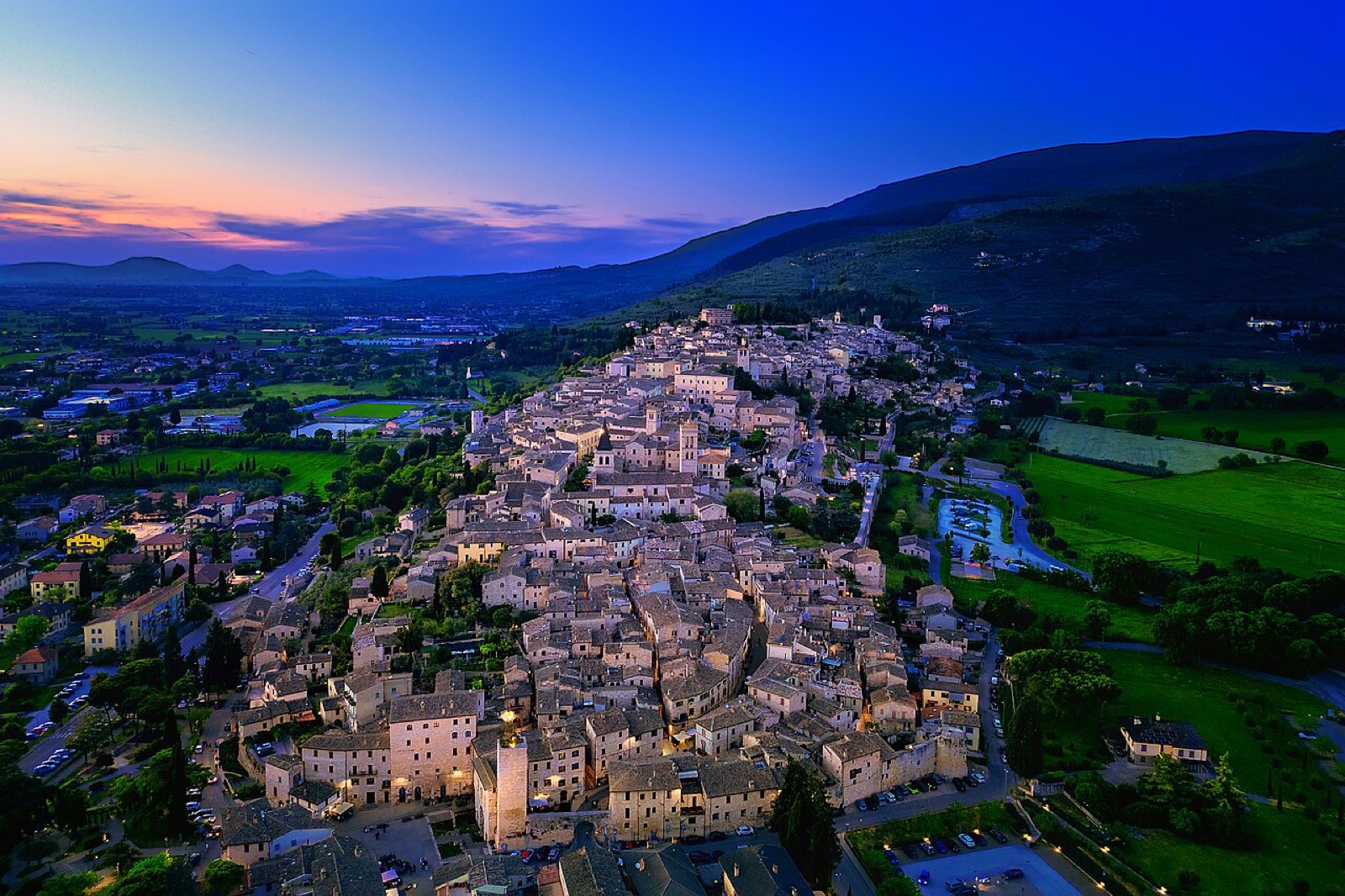
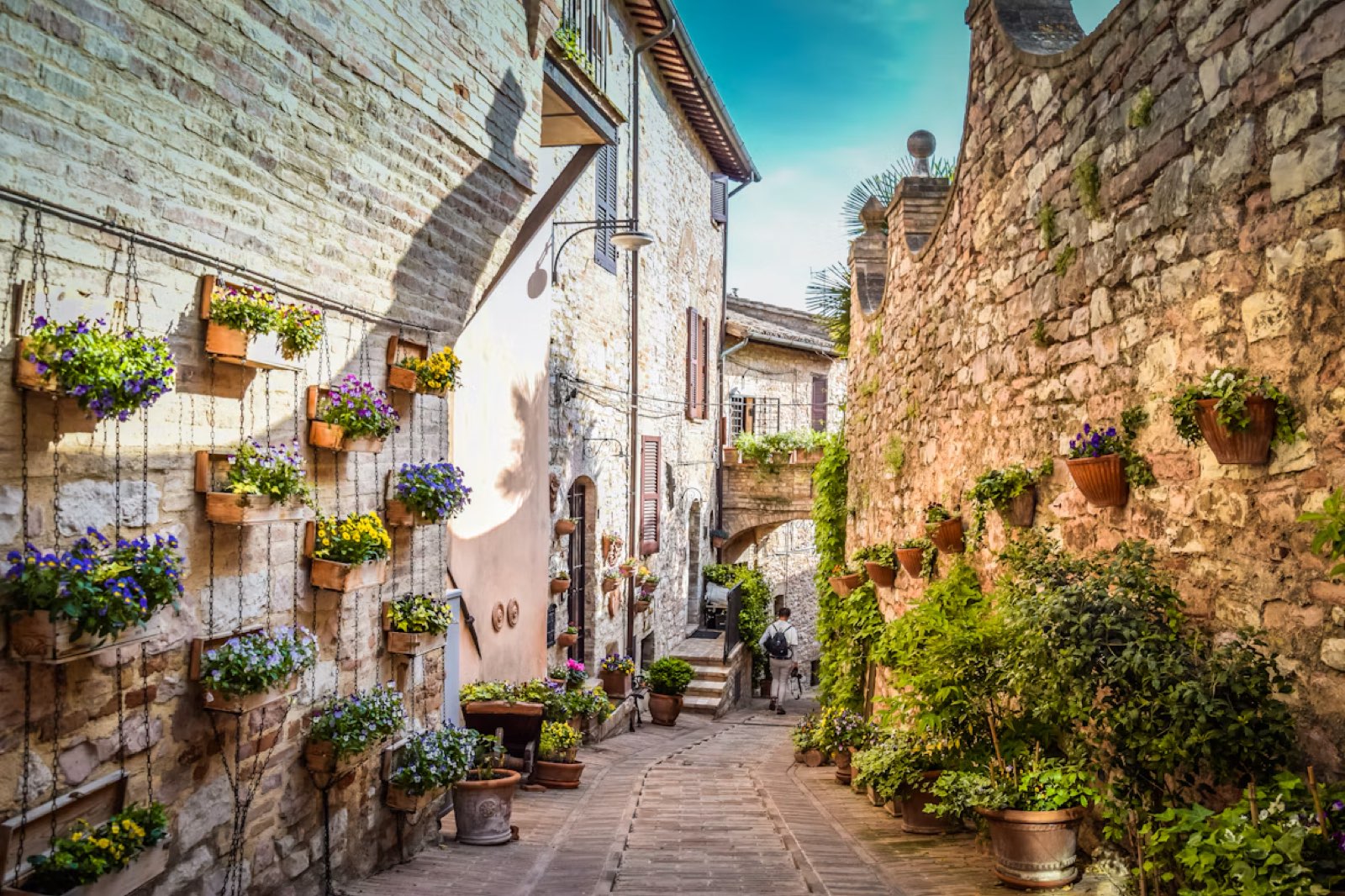
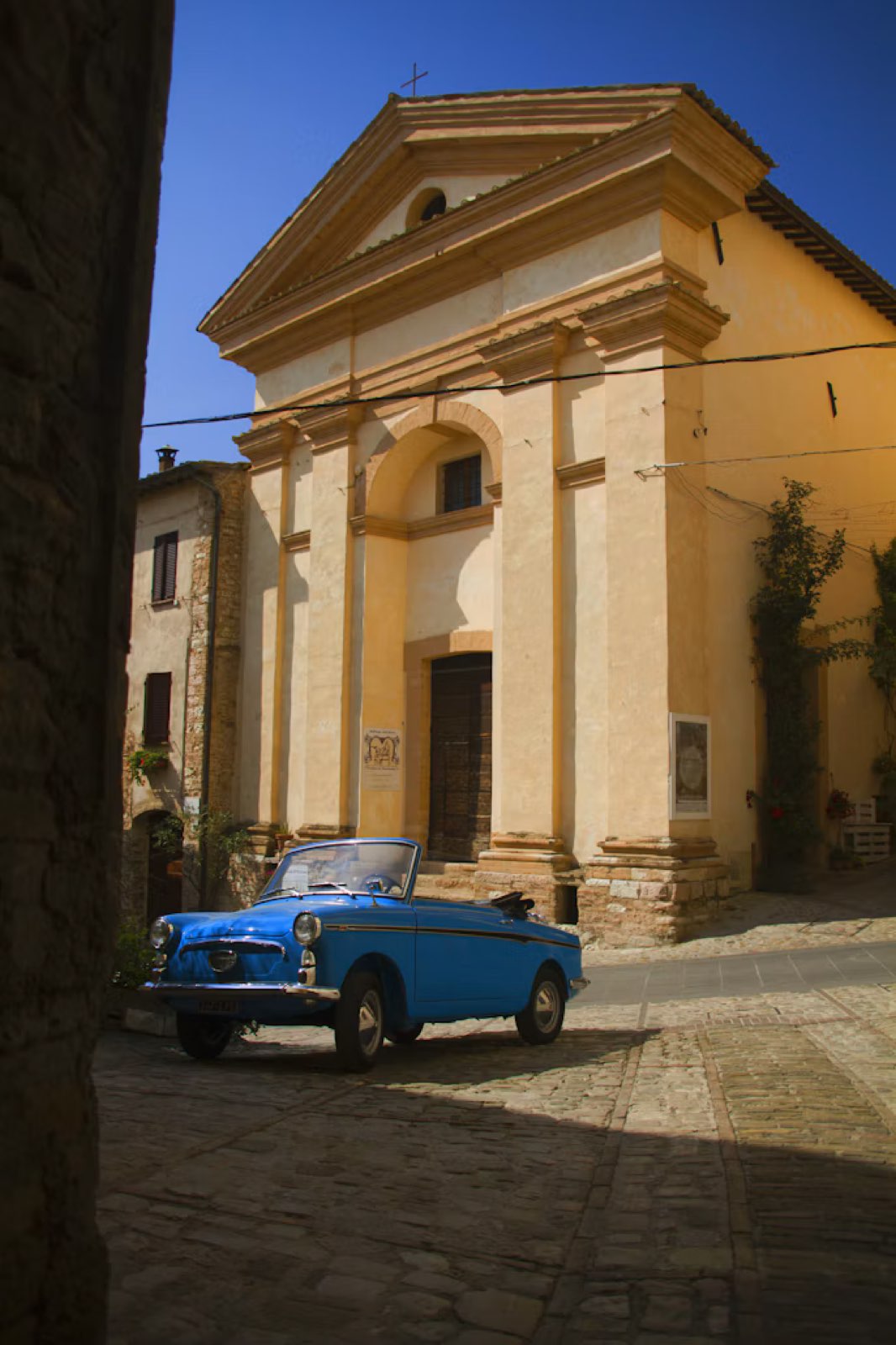
Set on the slopes of Mount Subasio, between Assisi and Foligno, Spello is one of Italy’s most beautiful villages. Houses of pink and white Subasio stone climb narrow lanes and stairways, among flower-filled balconies and views over the Umbrian valley.
Everything is within walking distance: a few minutes from our home you are in the old town, and you can walk all the way up to the viewpoint at the top.
A Roman town
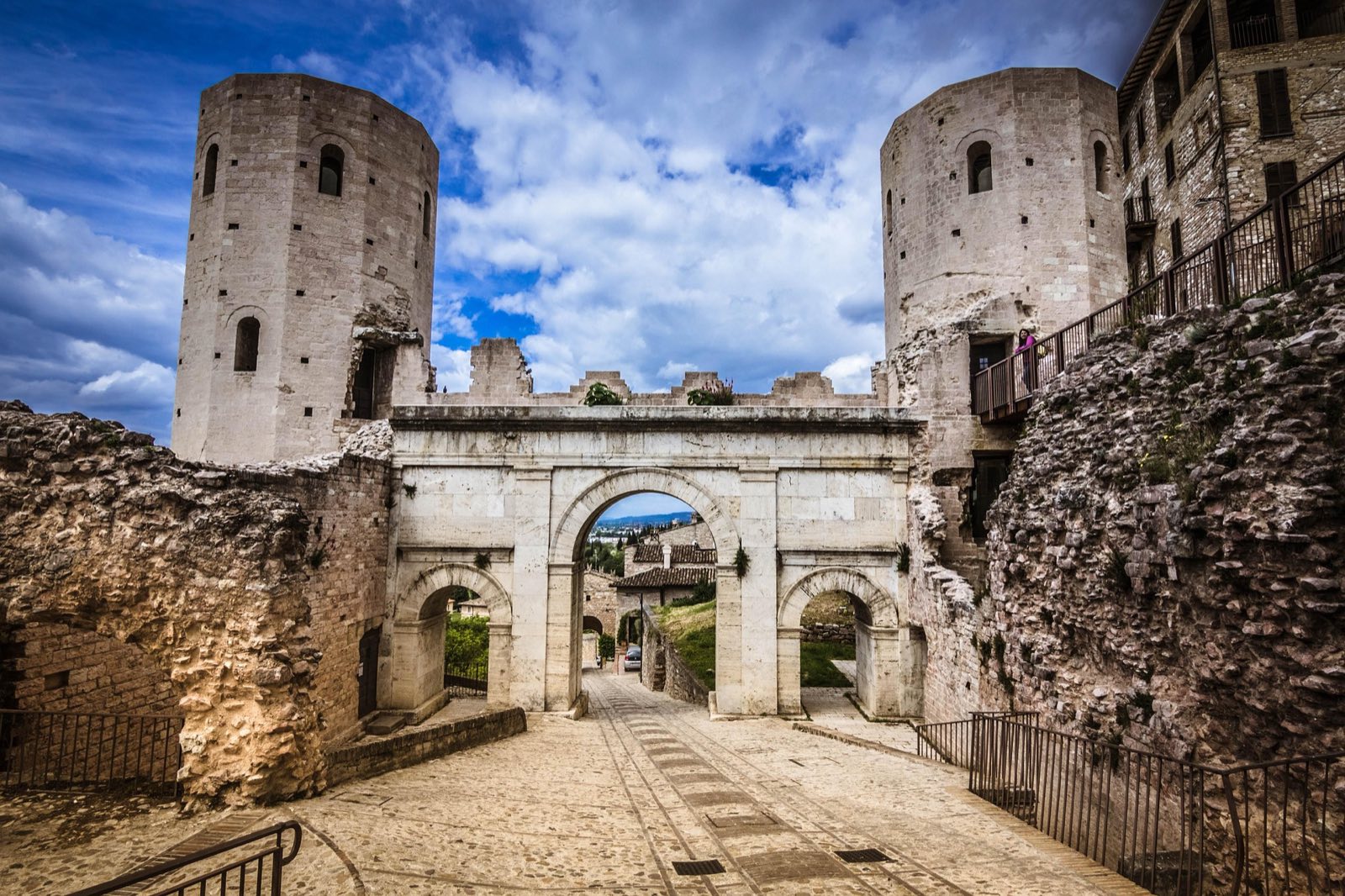
Under Augustus, Spello was the Colonia Julia Hispellum. Long stretches of the Roman walls survive, together with the town gates: Porta Consolare, Porta Venere with its two Towers of Propertius, and Porta Urbica, which gives our home its name.
On the plain below the village you can visit the Villa dei Mosaici, a Roman villa with its mosaic floors still in place.
Art and Renaissance
In the Collegiata di Santa Maria Maggiore, the Baglioni Chapel holds Pinturicchio’s frescoes, one of the finest Renaissance cycles in Umbria.
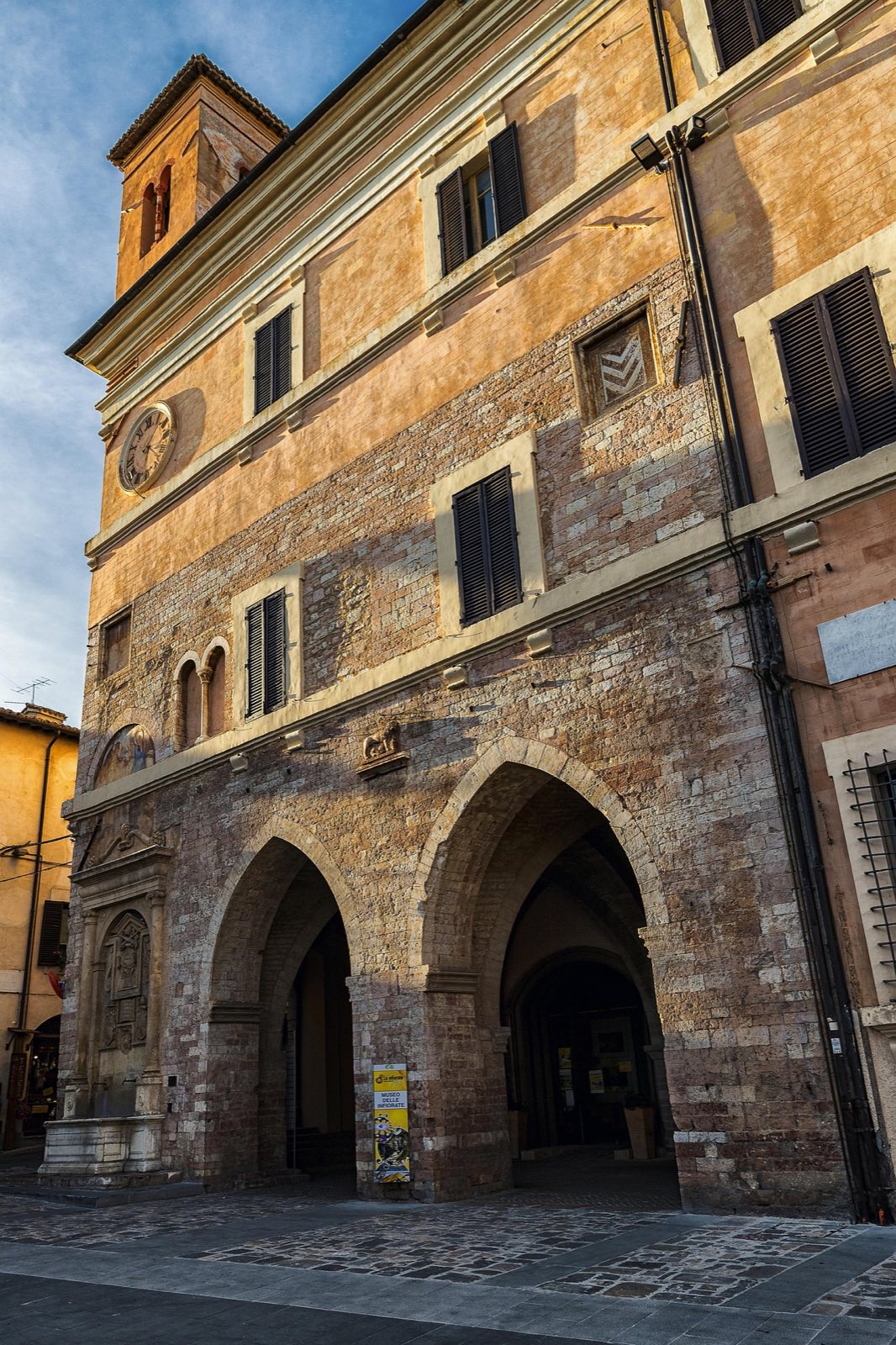
Wandering around you will find churches, medieval palaces and intimate squares such as Piazza della Repubblica with the Palazzo Comunale.
The village of flowers
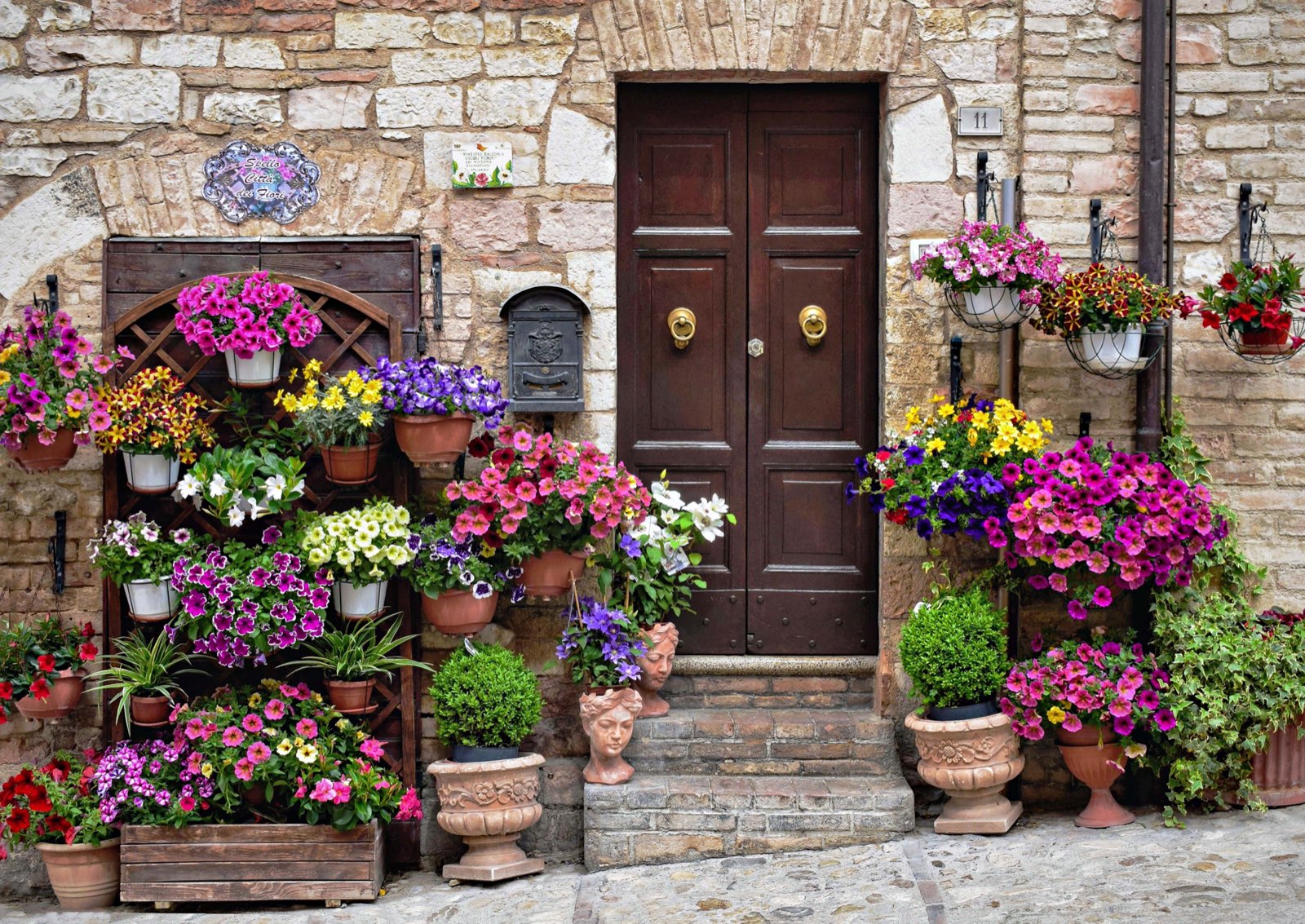
On the night of Corpus Domini hundreds of volunteers create carpets and pictures of petals along the streets: the next morning Spello is an open-air museum. This is the Infiorata, the town’s most famous festival.
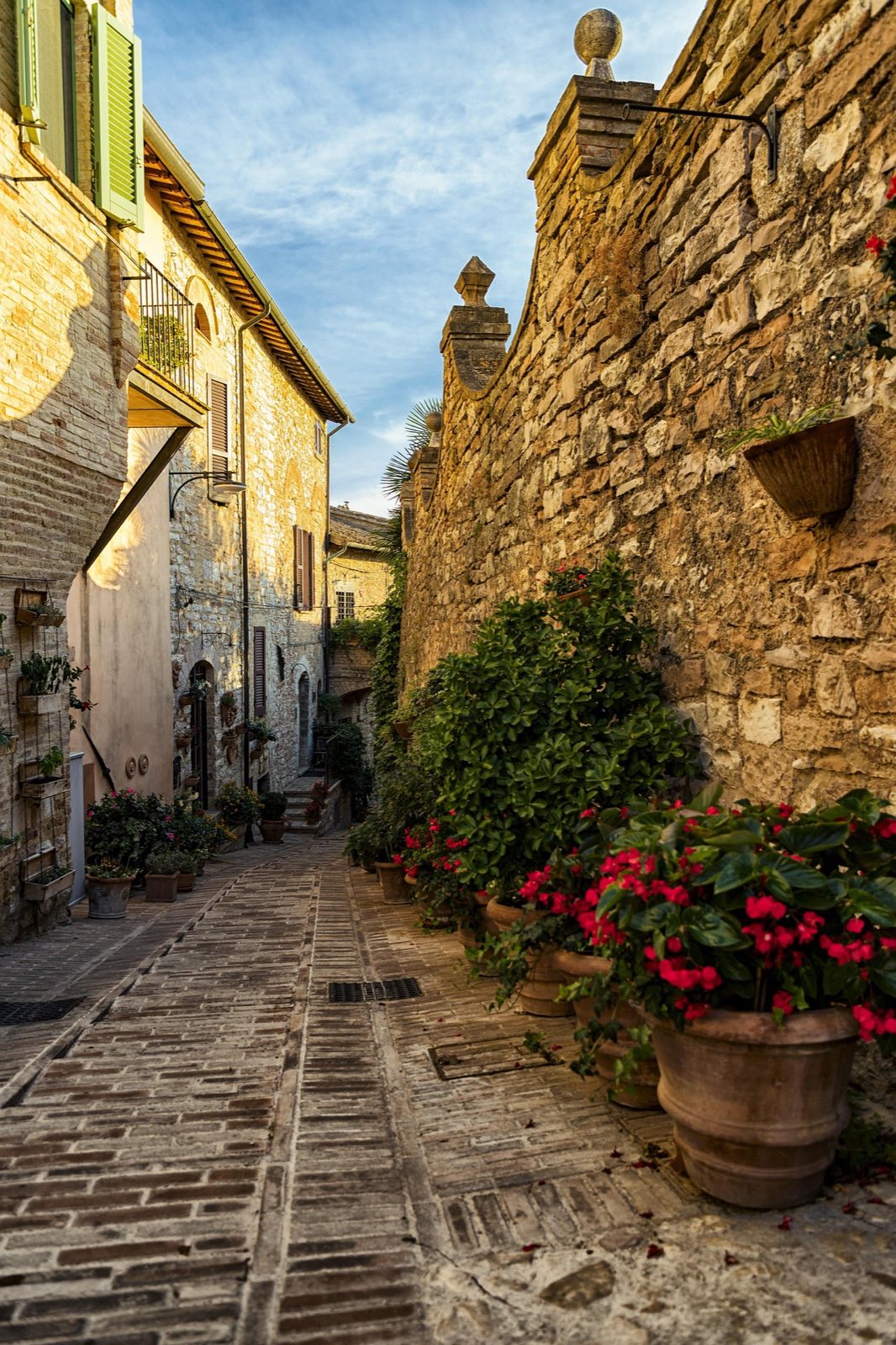
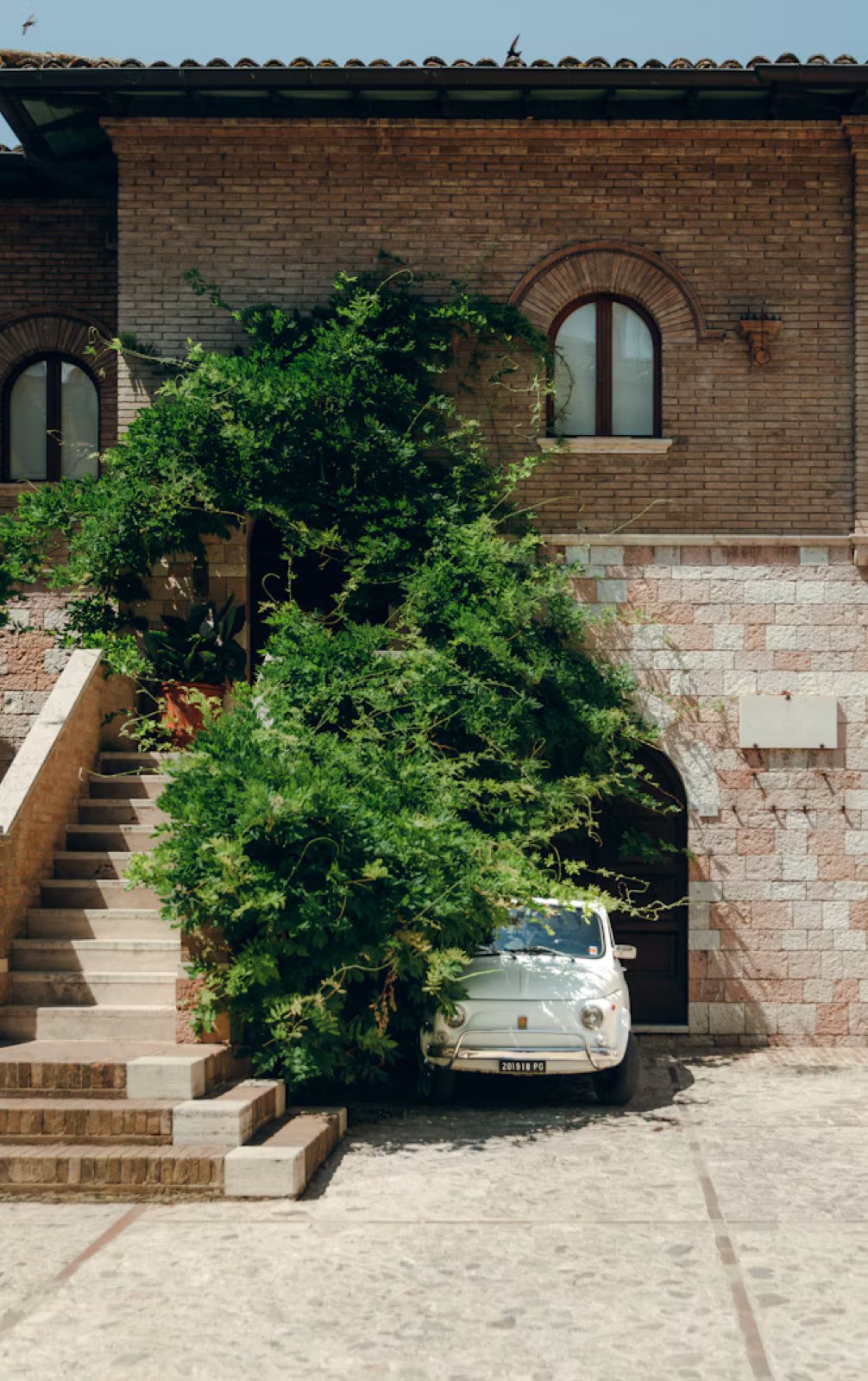
But there are flowers all year round: pots on the steps, geraniums at the windows, climbing plants on the walls.
Olive oil, wine and trails
Spello is surrounded by the olive groves that run from Assisi to Spoleto: in autumn, taste the new oil on bruschetta. Twenty minutes away are the Sagrantino wineries of Montefalco.
Trails leave from the village through the olive groves and up Mount Subasio, such as the walk along the Roman aqueduct to Collepino.
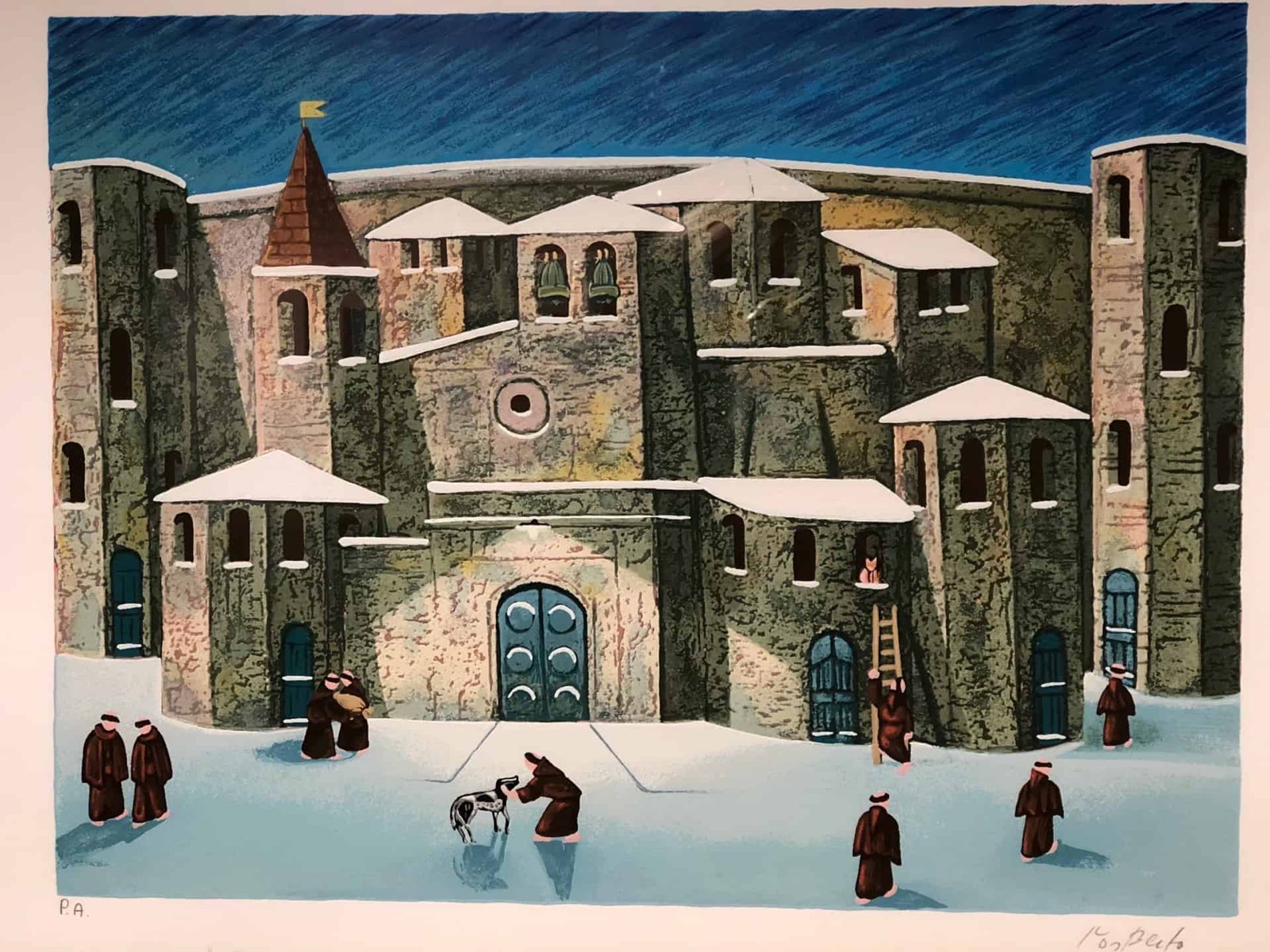
Norberto
Norberto Proietti (Spello, 1927 – 2009), known to everyone simply as Norberto, is Spello’s naïve painter. A tailor by trade, from 1961 he devoted himself entirely to painting: in his pictures tiny friars wander through medieval villages, wheat fields and Umbrian landscapes, inspired by Giotto’s frescoes in Assisi and Spello.
He also made the Peace Pilgrim sculpture in front of the Upper Basilica of St Francis in Assisi.
In Spello you can see his work at the Museo Norberto, Via Cavour 61 (tel. +39 0742 652044).
Photos by chatst2 and gianniciu10 (Pixabay), Jocelyn Erskine-Kellie (Pexels) and Unsplash. Aerial view at sunset: Albus65, CC BY-SA 4.0.
Places of interest
Roman amphitheatre
What remains of the arena where Roman Hispellum gathered.
Porta Consolare
The gate most people use to enter the village: blocks of Subasio stone, a medieval tower and, high up, three Roman marble statues brought here from the amphitheatre in the 16th century.
Augustan walls and Porta Urbica
The Roman walls run for almost two kilometres around the village and in many places are still the original ones: among the best preserved in Italy. Porta Urbica, which gives our home its name, is part of them.
Porta Venere and the Towers of Propertius
Perhaps Spello’s most beautiful gate: an Augustan arch set between two tall twelve-sided towers.
Porta dell’Arce (Porta dei Cappuccini)
The old Roman entrance on the north side, towards the upper part of town.
Palazzo Comunale
Home to the rescript in which Emperor Constantine granted privileges to the town, along with Roman inscriptions and portraits and a library with Venetian furniture. In front, a 16th-century fountain bearing the arms of Pope Julius III.
Palazzo Baglioni
On Piazza della Repubblica, the residence of the Baglioni, the Perugian family who ruled Spello until the mid-17th century.
Palazzo Urbani
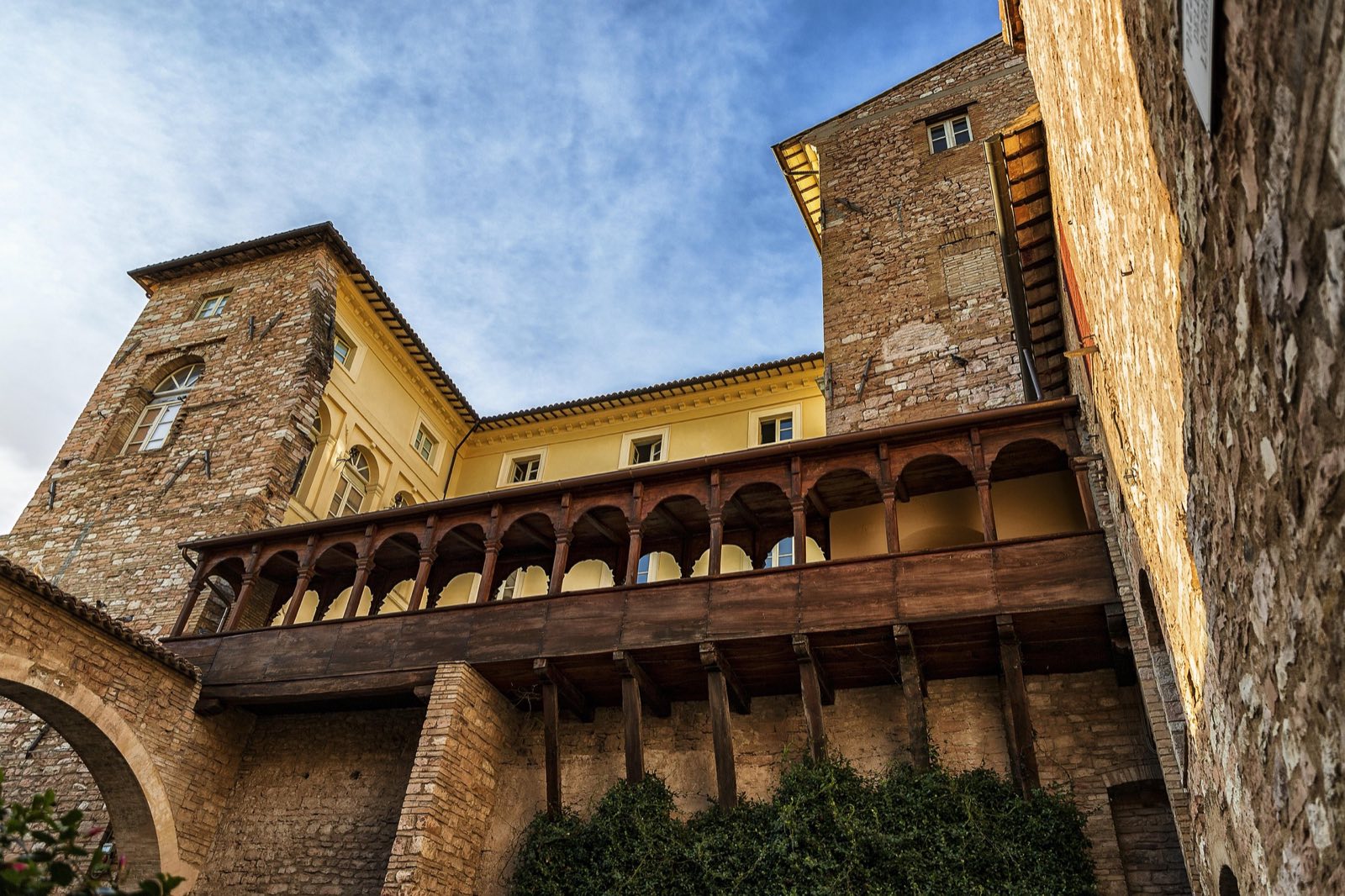
Easy to spot thanks to its early 17th-century wooden gallery and roof.
Cappella Tega
A small chapel frescoed by L’Alunno and painters of the Mazzaforte workshop.
Collegiata di Santa Maria Maggiore
The village’s main church: Pinturicchio’s frescoes and a Deruta majolica floor in the Baglioni Chapel, and a Renaissance ciborium by Rocco da Vicenza on the high altar.
Church of Sant’Andrea
Home to a large altarpiece by Pinturicchio of the Madonna enthroned among saints.
Church of San Lorenzo
Frescoes, a 15th-century tabernacle and 17th-century paintings.
Former Oratory of Sant’Antonio Abate
A small 16th-century oratory with two frescoes of the period, one by the local painter known as Il Papacello.
Church of San Claudio
Outside the centre, a small Romanesque church almost a thousand years old, with medieval frescoes inside.
Church of San Girolamo
Villa dei Mosaici
A recently discovered Roman villa: its large mosaic floors can now be visited in a modern museum in the Sant’Anna area.
Villa Fidelia
An elegant villa with an Italian garden just outside the village, hosting concerts and events during the year.
Civic and Diocesan Art Gallery
In the Palazzo dei Canonici, seven centuries of local art, from the 14th to the 20th century.
Museo Norberto
The works of Spello’s naïve painter, at Via Cavour 61.
Come and discover it
Our home is at the gates of the village, with private parking: the perfect base to enjoy Spello and the Umbrian valley.
Check availability